hw water care for freshwater aquariums
Suitable conditions for aquatic life and successful breeding
Aquariums are carefully maintained biotopes with a sensitive biological balance. Consistently good water quality helps maintain that balance. hw Wiegandt water conditioners and care products support suitable conditions for freshwater fish and plants.
We will be happy to help you choose a suitable care product for your aquarium.


hw ferrovit
Iron complex for freshwater aquarium plants
hw ferrovit supplies iron and trace elements to support healthy leaves, roots and vigorous plant growth. It helps prevent deficiency symptoms caused by an insufficient supply of these nutrients.
In an aquarium with fish, feeding also supplies nitrogen, phosphorus and potassium. Requirements can differ in aquariums devoted mainly to plants. Consider the nutrient supply as a whole when choosing additional fertilisers.
hw ferrovit supplies iron in a form available directly to aquatic plants and in a chelated form that acts as a reserve. This reserve is made available gradually or through processes at the root surface. An iron test may therefore detect only part of the iron supplied.
To support the increased nutrient demand associated with new leaves and shoots, hw ferrovit also contains magnesium, manganese, copper, molybdenum, zinc, boron, iodine, fluorine, caesium, strontium, nickel, cobalt, chromium, bismuth and vanadium.
Dosage
Add 15 ml per 100 litres of aquarium water each week. When changing water, add 15 ml per 100 litres of replacement water.

hw tracevit
Trace elements for freshwater aquariums
Fish and plants use up trace elements through metabolism and growth. In the limited water volume of an aquarium, regular replenishment helps maintain the supply.
A shortage can affect well-being, behaviour, growth and pigmentation. hw tracevit supplies trace elements of the kinds found in natural freshwater environments and helps prevent deficiency symptoms when used as directed.
hw tracevit for freshwater aquariums
hw tracevit contains, among other elements, boron, bromine, chromium, caesium, iron, fluorine, iodine, copper, potassium, cobalt, lithium, manganese, magnesium, molybdenum, nickel, rubidium, selenium, strontium, vanadium, bismuth and zinc.
Dosage
For regular maintenance, add 5 ml per 100 litres of aquarium water every 7 days. In densely planted aquariums, the dose may be increased to 10 ml per 100 litres.
When changing water
Add 5 ml per 100 litres of replacement water. When using demineralised water or reverse-osmosis water, increase this to 10 ml per 100 litres of replacement water.
For demineralised or reverse-osmosis water, we also recommend hw ReMineral to replenish minerals.

hw multivit
Multivitamin supplement for freshwater and marine aquariums
hw multivit supplies a balanced combination of vitamins to support natural defences, well-being, colouration and breeding. Use it to supplement dried or frozen food, which can lose vitamins during processing.
Vitamins in aquarium care
Vitamin deficiencies can affect the health and development of aquarium fish even when their food provides carbohydrates, fats and protein. hw multivit supplies a balanced combination of vitamins to supplement the diet and support health, natural colouration and breeding.
Supplementation is particularly useful when feeding dried or frozen food, which can lose vitamins during processing. hw multivit is also suitable for supporting the vitamin supply of sensitive juvenile fish.
Application instructions
Add a few drops to dried or frozen food immediately before feeding. Allow dried food to absorb the supplement for approximately 5–10 minutes, using only enough to be almost completely absorbed.
Defrost frozen food and briefly rinse it with clean tap water, then apply the supplement in the same way. Defrosted food absorbs smaller quantities. To improve absorption, let the prepared food stand in the refrigerator for approximately 30 minutes, up to a maximum of 2 hours.
Important: Shake bottle well before and between applications!
hw® multivit contains the following vitamins and related ingredients, among others:
- Vitamin A
- Vitamin B1
- Vitamin B2
- Vitamin B12
- Vitamin C
- Vitamin D3
- Vitamin E
- Vitamin H
- Glycine
- Leucine
- L-tyrosine
- Meso-inositol
- Nicotinamide
- Tryptophan
Description of the main components:
- Alpha-tocopherol:
Vitamin E. Acts as an antioxidant; protects the fatty acids, retinol and enzymes against oxidation; also influences the absorption of cyanocobalamin and nuclein metabolism; antisterility vitamin. - Ascorbic acid:
Vitamin C. Serves for the formation and maintenance of the collagen level; reducer in tyrosine metabolism; protects the organism against a deficiency of other vitamins, also encourages adrenalinogenesis. - Cyanocobalamin:
Vitamin B12. Coenzyme, growth factor; encourages lipid and carbohydrate metabolism as well as the formation of blood. - D-Biotin:
Vitamin H. Growth factor, among other things for nanoplankton; also synthesised in plants. Biotin is a coenzyme for CO2 fixation and transcarboxylation in the presence and involvement of magnesium ions. - Glycine:
Amino-acetic acid. Cell protein building substance; for blood pigment synthesis. - Leucine:
Amino-isocaproic acid. Cell protein building substance. - Meso-inositol:
Constituent of every living cell; encourages cation transport through the cell membrane and stimulation of the nerves. Growth factor for numerous types of animal cell. - Nicotinamide:
Constituent of the cell building substance NADP (nicotinamide adenine dinucleotide phosphate). Particularly important for hydrogen transport in biological oxidation. - Retinol:
Vitamin A. Indispensable as a pigment for the retina, for reproductiveness, contributes to the stability of the lipoprotein membrane of the cell and subcellular particles. - Thiamine:
Vitamin B1. Coenzyme function for degradation of carbohydrates. - Tryptophan:
An amino acid and precursor of the neurotransmitter serotonin. - Tyrosine:
An amino acid and precursor of thyroid hormones and pigments such as melanin.

hw protavit
Protective colloids for freshwater aquariums
hw protavit conditions tap water for aquarium fish and plants. Its protective colloids support the mucous membranes of fish, bind pollutants such as chlorine and certain metal compounds, and help reduce stress during aquarium setup and water changes.
The formulation replenishes colloids of the kinds found in natural waters and supports the biological balance of the aquarium. It is also suitable when introducing new fish or after damage to the protective mucus layer.
Natural protective colloids for freshwater aquariums
Natural aquatic environments contain colloidal substances that support the protective mucus layer of fish and bind or neutralise certain pollutants. These substances develop only gradually in a newly filled aquarium, and water changes can reduce their concentration.
Damage to the mucus layer, for example during catching and transport, increases susceptibility to infection. hw protavit supports regeneration of this protective layer and is particularly useful when introducing new fish.
Application and dosage
When setting up an aquarium, add 5 ml per 10 litres of aquarium water. When changing water, add 5 ml per 10 litres of replacement water.
For mucosal injuries or to reduce stress symptoms, add a further 2.5 ml per 10 litres of aquarium water in addition to the normal dose. This supports regeneration and helps reduce irritation by binding irritants before they reach sensitive tissue.
For acute injuries, switching off the aquarium lighting for the next 12–14 hours can provide an early rest period as a supportive measure.

hw addivit
pH increaser for marine and freshwater aquariums
hw addivit raises the pH of marine and freshwater aquarium water while preserving its delicate ionic balance. Natural alkaline minerals neutralise excess acids.
Application and dosage
Add no more than 2.5 ml hw addivit per 100 litres of aquarium water at each step, or 1 ml per 10 US gallons. Wait until the product is fully mixed into the aquarium water, then measure the pH before adding more. Continue in measured steps until the desired pH is reached.
Check the pH during the following 48 hours. Natural biological processes may make a further adjustment necessary. Once the pH has stabilised, further dosing is normally needed only after a major water change.

hw reduvit
pH reducer for marine and freshwater aquariums
hw reduvit lowers the pH of marine and freshwater aquarium water while preserving its delicate ionic balance. Its action is based on mineral ingredients.
Application and dosage
Add no more than 2.5 ml hw reduvit per 100 litres of aquarium water at each step, or 1 ml per 10 US gallons. Wait until the product is fully mixed into the aquarium water, then measure the pH before adding more. Continue in measured steps until the desired pH is reached.
Check the pH during the following 48 hours. Natural biological processes may make a further adjustment necessary. Once the pH has stabilised, further dosing is normally needed only after a major water change.

All freshwater care products
Looking for more freshwater aquarium care products and additives? Explore the full range in our product catalogue.
Information and tips for
marine and freshwater aquariums
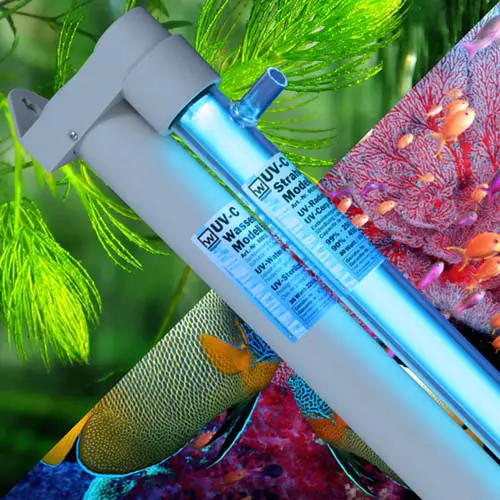
UV radiation
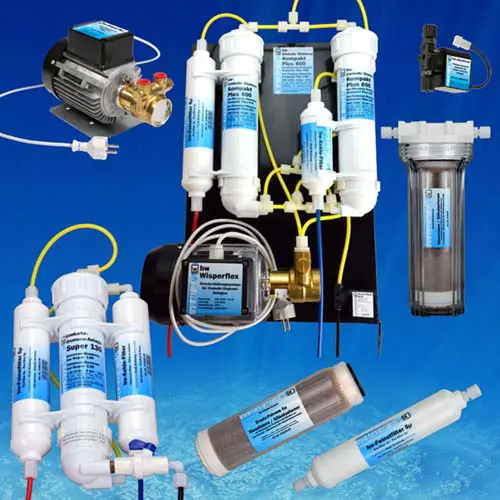
Reverse osmosis