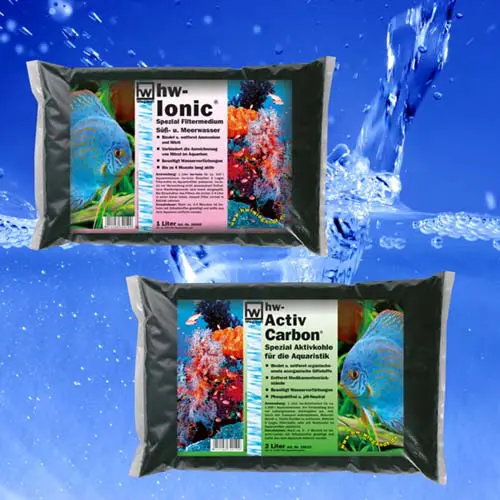
hw water care for marine and reef aquariums
Supporting suitable conditions for marine life
Marine and reef aquariums are carefully maintained biotopes with a sensitive biological balance. Consistently good water quality is an essential part of maintaining that balance.
hw Wiegandt water conditioners and care products support water quality and suitable conditions for the organisms in your aquarium. Our range has been developed and refined for more than 50 years, drawing on practical experience and scientific findings.

hw biotip
Bioactive substances and amino acids for marine aquariums
hw biotip supplies bioactive components of the kinds found in natural seawater and supports metabolic processes in marine organisms. It includes vitamins A, B1, B12, C, E, H and PP, meso-inositol, glycine, leucine and L-tyrosine.
hw biotip: bioactive substances and amino acids
hw biotip contains bioactive components and amino acids of the kinds found in natural seawater. It supports the natural metabolic processes of organisms in marine and reef aquariums. Its ingredients include vitamins A, B1, B12, C, E, H and PP, meso-inositol, glycine, leucine and L-tyrosine.
hw biotip provides the same groups of bioactive substances included in hw Marinemix professional and hw Marinemix reefer. These substances are taken up by marine organisms or broken down during biological and chemical processes, so regular replenishment helps maintain suitable conditions.
Enzymes are organic catalysts involved in metabolism. They lower the activation energy required for reactions and accelerate chemical processes. Some work together with coenzymes.
The hw biotip formulation combines coenzymes and growth factors involved in metabolism, hormone production, vision, pigment formation and reproduction. Its development also considered the role of cobalt-containing vitamin B12, cyanocobalamin. Follow the recommended dosage below.
Brief introduction to the main ingredients:
- Meso-inositol:
Constituent of every living cell; encourages cation transport through the cell membrane and stimulation of the nerves. Growth factor for numerous types of animal cell. - Nicotinamide:
Constituent of the cell building substance NADP (nicotinamide adenine dinucleotide phosphate). Particularly important for hydrogen transport in biological oxidation. - Tryptophan:
An amino acid and precursor of the neurotransmitter serotonin. - Tyrosine:
An amino acid and precursor of thyroid hormones and pigments such as melanin. - Cyanocobalamin:
Vitamin B12. Coenzyme, growth factor; encourages lipid and carbohydrate metabolism as well as the formation of blood. - Retinol:
Vitamin A. Indispensable as a pigment for the retina, for reproductiveness, contributes to the stability of the lipoprotein membrane of the cell and subcellular particles. - Alpha-tocopherol:
Vitamin E. Acts as an antioxidant; protects the fatty acids, retinol and enzymes against oxidation; also influences the absorption of cyanocobalamin and nuclein metabolism; antisterility vitamin. - Ascorbic acid:
Vitamin C. Serves for the formation and maintenance of the collagen level; reducer in tyrosine metabolism; protects the organism against a deficiency of other vitamins, also encourages adrenalinogenesis. - Glycine:
Amino-acetic acid. Cell protein building substance; for blood pigment synthesis. - Leucine:
Amino-isocaproic acid. Cell protein building substance. - Thiamine:
Vitamin B1. Coenzyme function for degradation of carbohydrates. - D-Biotin:
Vitamin H. Growth factor, among other things for nanoplankton; also synthesized in plants. Biotin is a coenzyme for CO2 fixation and transcarboxylation in the presence and involvement of magnesium ions.
Dosage recommendation:
To ensure an optimum supply of bio-elements for all marine organisms in your aquarium we recommend the following dosage: Add one dosing cap (20 ml) for every 100 liters (26.42 US gallons) aquarium water in a weekly addition.

hw multivit
Multivitamin supplement for freshwater and marine aquariums
hw multivit supplies a balanced combination of vitamins to support natural defences, well-being, colouration and breeding. Use it to supplement dried or frozen food, which can lose vitamins during processing.
Vitamins in aquarium care
Vitamin deficiencies can affect the health and development of aquarium fish even when their food provides carbohydrates, fats and protein. hw multivit supplies a balanced combination of vitamins to supplement the diet and support health, natural colouration and breeding.
Supplementation is particularly useful when feeding dried or frozen food, which can lose vitamins during processing. hw multivit is also suitable for supporting the vitamin supply of sensitive juvenile fish.
Application instructions
Add a few drops to dried or frozen food immediately before feeding. Allow dried food to absorb the supplement for approximately 5–10 minutes, using only enough to be almost completely absorbed.
Defrost frozen food and briefly rinse it with clean tap water, then apply the supplement in the same way. Defrosted food absorbs smaller quantities. To improve absorption, let the prepared food stand in the refrigerator for approximately 30 minutes, up to a maximum of 2 hours.
Important: Shake bottle well before and between applications!
hw® multivit contains the following vitamins and related ingredients, among others:
- Vitamin A
- Vitamin B1
- Vitamin B2
- Vitamin B12
- Vitamin C
- Vitamin D3
- Vitamin E
- Vitamin H
- Glycine
- Leucine
- L-tyrosine
- Meso-inositol
- Nicotinamide
- Tryptophan
Description of the main components:
- Alpha-tocopherol:
Vitamin E. Acts as an antioxidant; protects the fatty acids, retinol and enzymes against oxidation; also influences the absorption of cyanocobalamin and nuclein metabolism; antisterility vitamin. - Ascorbic acid:
Vitamin C. Serves for the formation and maintenance of the collagen level; reducer in tyrosine metabolism; protects the organism against a deficiency of other vitamins, also encourages adrenalinogenesis. - Cyanocobalamin:
Vitamin B12. Coenzyme, growth factor; encourages lipid and carbohydrate metabolism as well as the formation of blood. - D-Biotin:
Vitamin H. Growth factor, among other things for nanoplankton; also synthesised in plants. Biotin is a coenzyme for CO2 fixation and transcarboxylation in the presence and involvement of magnesium ions. - Glycine:
Amino-acetic acid. Cell protein building substance; for blood pigment synthesis. - Leucine:
Amino-isocaproic acid. Cell protein building substance. - Meso-inositol:
Constituent of every living cell; encourages cation transport through the cell membrane and stimulation of the nerves. Growth factor for numerous types of animal cell. - Nicotinamide:
Constituent of the cell building substance NADP (nicotinamide adenine dinucleotide phosphate). Particularly important for hydrogen transport in biological oxidation. - Retinol:
Vitamin A. Indispensable as a pigment for the retina, for reproductiveness, contributes to the stability of the lipoprotein membrane of the cell and subcellular particles. - Thiamine:
Vitamin B1. Coenzyme function for degradation of carbohydrates. - Tryptophan:
An amino acid and precursor of the neurotransmitter serotonin. - Tyrosine:
An amino acid and precursor of thyroid hormones and pigments such as melanin.

hw nanotip
Micronutrient solution for marine and reef aquariums
hw nanotip is formulated for corals, molluscs, sponges and other filter-feeding marine organisms. Its composition is based on their natural food sources. It supplies dissolved nutrients, micronutrients and food particles that can be taken up in a similar way to natural marine plankton.
Application and dosage
Like fish, corals, sponges and other filter-feeding organisms need a regular supply of food. Natural seawater contains dissolved nutrients and particles from zooplankton and phytoplankton. These food sources are often limited in an aquarium.
hw nanotip combines dissolved nutrients, micronutrients and food particles based on natural food sources. Uptake by corals can often be observed as increased polyp expansion. Add it near the water inlet or a circulation pump to distribute it evenly.
For an initial dose in a reef aquarium with a medium stocking density, add 2 ml per 100 litres (26.42 US gallons) approximately every 5 days. Use the enclosed graduated measuring cap.
In densely stocked reef aquariums with greater nutrient requirements, the dose can be increased to approximately 5 ml per 100 litres every 5 days. Alternatively, keep the dose at 2 ml per 100 litres and shorten the interval from 5 days to 2 days.
Avoid overdosing because it increases the nitrogen load in the aquarium water.
Shake well before use. Refrigerate after opening. Do not store above 25 °C (77 °F).

hw hydrokoll
Protective colloids for marine and reef aquariums
hw hydrokoll combines organic protective colloids similar to those found in natural seawater. It supports the conditioning and stabilisation of freshly prepared marine aquarium water and binds pollutants such as heavy metals, phenols and bacterial toxins.
It supports the protective function of fish mucus and coral tissue, particularly after damage, and helps reduce stress while newly introduced animals adjust to the aquarium.
Application and dosage
Freshly prepared artificial seawater often lacks the protective colloids found in established natural aquatic environments. These develop gradually in a new aquarium, and water changes can reduce their concentration.
hw hydrokoll binds heavy metals, phenols, bacterial toxins, colourants and fats so that they can be removed by a protein skimmer. Increased skimmer activity and foam production can therefore occur after dosing.
For the first application, add 5 ml per 10 litres of aquarium water (10 litres = approximately 2.64 US gallons).
For aquariums containing mainly sensitive marine organisms such as invertebrates and corals, subsequently add 2 ml per 10 litres every 14 days.
Important: Monitor the protein skimmer for the next 24–48 hours and reduce its output if necessary. Increased foaming can cause the collection cup to overflow.


hw tracetip 1 and 2
Trace elements for densely stocked reef aquariums
hw tracetip 1 and hw tracetip 2 are two complementary trace-element solutions for reef aquariums with a high density of corals. They are designed to meet increased trace-element requirements while remaining easy to use.
Selected high-purity chemicals with analysis certificates are used to keep the trace elements stable in the concentrated solutions. The formulations contain no colourants, preservatives, complexing agents or chelating agents.
Regular use supports the trace-element supply, coral growth, polyp expansion and natural colouration. Apply the two solutions separately and follow the dosing instructions below.
Application and dosage
Every 7 days, add approximately 15 ml of each solution, hw tracetip 1 and hw tracetip 2, per 100 litres (26.42 US gallons) of aquarium water. Add each solution separately in an area of strong water flow, such as near a circulation-pump outlet.
If coral colouration begins to fade after initially good development, overdosing may be a cause. Reduce the next dose to one third of the previous amount. Once colouration recovers, increase the dose gradually in small steps until suitable natural colouration is maintained. Keep this individually determined dose for subsequent applications.
Important: Never mix hw tracetip 1 and hw tracetip 2. Always use a separate measuring cup for each solution.

hw miratip
Trace elements for marine aquariums with mixed livestock
hw miratip is intended for marine aquariums with mixed livestock and an emphasis on ornamental fish. Biological processes and the growth of aquarium organisms gradually use up trace elements.
A shortage can affect growth, development and natural pigmentation. hw miratip replenishes trace elements consumed by these processes and supports a balanced supply. The formulation contains no complexing agents or artificially produced element compounds.
Selected trace elements in hw miratip
Bromine (Br), fluorine (F) and iodine (I) are among the trace elements involved in the growth of crustaceans, gorgonians and sponges. A shortage can affect supporting structures and the moulting of crabs and shrimps. Iodine also plays a role in tissue pigmentation.
Molybdenum (Mo) and vanadium (V) are involved in enzyme systems. Selenium contributes to protection against oxidative damage. Iron (Fe) is needed for chlorophyll formation and also influences coral colouration.
The trace elements in hw miratip are combined in coordinated proportions to support uptake and help prevent deficiencies in marine aquariums with mixed livestock.
Dosage
Initial dose: add 5 ml per 100 litres of aquarium water once.
Subsequent doses: add 10 ml per 100 litres of aquarium water each week.
Keep out of reach of children. Avoid contact with skin and eyes. Preferably use within 12 months after opening.

hw iodtip
Iodine supplement for marine and reef aquariums
hw iodtip supports growth, pigmentation and resilience in corals and other marine invertebrates. It supports the formation of skeletal structures in echinoderms such as sea urchins and the growth and moulting of crustaceans.
It also helps corals adjust to changes in lighting and other aquarium conditions and supports their protective tissue.
Natural marine water has an average iodine concentration of about 60 µg/l (all detectable iodine compounds included). This value provides a simplified reference value for natural marine water from the offshore regions.
Due to the decomposition of algae in the coastal reef regions, and the resulting release of iodine accumulated in the algae, the iodine concentration in these locations is significantly higher.
This helps explain why reef organisms are accustomed to readily available iodine compounds in their environment and depend on them to varying degrees.
The element iodine
Iodine can be added to marine aquarium water in many different forms. Unfortunately, iodine supplementation in reef aquariums is often oversimplified without considering the possible risks.
Always bear in mind that pure, unstabilised iodine is a very aggressive, volatile and light-sensitive halogen. Iodine in its free or unstabilised form can be absolutely hazardous for any marine life form in the aquarium. Iodine in this form can cause chemical burns and serious injury to respiratory organs, mucous membranes and organic tissue structures. Unfortunately many iodine additives available on the market are based on simple, unstabilised and very volatile iodine compounds. Examples include relatively unstable and therefore often aggressive potassium iodide solutions, or simple alcoholic solutions containing free elemental iodine.
Unfortunately, these simple iodine solutions are still very common and can have all the disadvantages described above.
Application and dosage
Add 2.5 ml hw iodtip per 200 litres of aquarium water once a week, or 1 ml per 21 US gallons once a week.

hw strontip
Strontium supplement for marine and reef aquariums
hw strontip is a concentrated strontium supplement for marine and reef aquariums. It supports the growth and pigmentation of stony and soft corals, molluscs and calcareous algae.
The combination of ingredients supports strontium uptake into cells and tissues and helps maintain the supply to reef organisms.
Strontium is present in natural seawater and in hw Marinemix professional and hw Marinemix reefer at a concentration of approximately 8–10 mg/l.
Strontium (Sr) has properties similar to calcium (Ca). Many marine organisms incorporate it into skeletal structures together with calcium. Regular supplementation with hw strontip supports the supply to calcifying organisms such as stony corals, Tridacna clams and calcareous algae.
Maintaining a suitable strontium concentration supports the healthy growth of Acropora corals.
Application and dosage
Add 2 ml hw strontip per 100 litres of aquarium water every 14 days. In densely stocked aquariums, the dose may be increased to a maximum of 2.5 ml per 100 litres every 14 days.
Alternatively, add 3 ml per 40 US gallons every 14 days, increasing to a maximum of 4 ml per 40 US gallons in densely stocked aquariums.
Excessive dosing can harm aquarium organisms. When using higher doses, check the strontium concentration in the aquarium water.

hw® odinex
Treatment against Oodinium in marine aquariums
hw® odinex is one of the most reliable remedies against Oodinium and Cryptocarion in marine aquariums.
hw® odinex has been used successfully several million times in over 30 years of intensive research and is considered indispensable in marine aquaristics when treatment against Oodinium and Cryptocarion is needed.
Important!
hw® odinex is lethal for all invertebrates like anemones, all kinds of corals, mollusks, crustaceans, crabs, shrimps, etc.
hw® odinex must only be used in marine fish aquariums!
Turn ozonation OFF to avoid unwanted interactions!
Indication and how to start:
At the first signs of an outbreak of Oodinium or Cryptocarion, add 2 ml hw® odinex per 20 litres (4 ml per 10 US gallons) of aquarium water.
Treatment cycle:
On treatment day 1, add 2 ml hw® odinex per 20 litres (4 ml per 10 US gallons) of aquarium water.
On treatment days 2 and 3, add 1 ml hw® odinex per 20 litres each day (2 ml per 10 US gallons) of aquarium water.
With an Oodinium infection, symptoms usually start to disappear after treatment day 3.
If Oodinium symptoms have only improved slightly by treatment day 3, repeat the treatment cycle using the stated doses for days 1, 2 and 3.
Infection with Cryptocarion:
If the infection is caused by Cryptocarion, treatment may take up to 14 days because this pathogen is more resistant.
Things to know before and during the treatment:
The treatment can often be favorably influenced by increasing the temperature to about 28 °C. At this slightly elevated temperature, development of the pathogens is greatly accelerated, so that the spore phase (the only phase in which the pathogen can be neutralised) is reached more quickly.
During treatment, aquarium water should only be filtered mechanically via gravel, filter wadding or other neutral filter media. During the treatment cycle, the protein skimmer will usually show increased activity and should remain switched on but without any kind of ozonation!
Biological filter systems, such as trickle filters, etc., can remain in the water circulation system. However, damage to the bacterial flora in these filters with extended duration of treatment cannot be completely excluded. On completion of treatment, this bacterial flora will normally recuperate within a few days.
hw® UV water sterilisers can and should remain switched on to support treatment.
Ozonation must remain switched OFF to avoid unwanted interactions with the active substances in hw® odinex!
Since the animals already have oxygen absorption difficulties, depending on the intensity of the disease, it is important to ensure good gas exchange in the aquarium water to maintain a good oxygen level.
An additional aeration with an air pump, in combination with hw® Limewood-air-diffuser can help to increase the oxygen level in the aquarium water.
In the case of organically heavily loaded aquarium water (as found in fish aquariums with a high stocking density), an oxygen deficiency can occur when using hw® odinex, since a certain degree of oxygen depletion occurs due to the active substances.
If it is noticed that fish show increased breathing activity (mouth and gill cover moving very fast) or fish keep their gill covers open, it may be necessary to immediately transfer the fish into fresh aquarium water with a higher oxygen level.
When treatment is finished:
A change of water after treatment is normally unnecessary, since 99 per cent of the active substances precipitate within 10 days after the last addition, i.e. the active substances enter into combinations which cease to be soluble under normal conditions.
However, if invertebrates are to be placed in the aquarium after treatment, it is advisable to first replace the aquarium substrate, the filter substrate and the aquarium water, since the active substances can be reactivated through an oxidation process, as occurs when ozone is applied to aquarium water.
hw® odinex should not be confused with doubtful copper solutions of varying concentration. Although hw® odinex contains copper among other active substances, it is far better tolerated by the animals than pure copper preparations.
The doses stated for US gallons are rounded to make dosing easier.
Important!
hw® odinex is lethal for all invertebrates like anemones, all kinds of corals, mollusks, crustaceans, crabs, shrimps, etc.
hw® odinex must only be used in marine fish aquariums!
Turn ozonation OFF to avoid unwanted interactions!
Indication and how to start:
At the first signs of an outbreak of Oodinium or Cryptocarion, add 2 ml hw® odinex per 20 litres (4 ml per 10 US gallons) of aquarium water.
Treatment cycle:
On treatment day 1, add 2 ml hw® odinex per 20 litres (4 ml per 10 US gallons) of aquarium water.
On treatment days 2 and 3, add 1 ml hw® odinex per 20 litres each day (2 ml per 10 US gallons) of aquarium water.
With an Oodinium infection, symptoms usually start to disappear after treatment day 3.
If Oodinium symptoms have only improved slightly by treatment day 3, repeat the treatment cycle using the stated doses for days 1, 2 and 3.
Infection with Cryptocarion:
If the infection is caused by Cryptocarion, treatment may take up to 14 days because this pathogen is more resistant.
The doses stated for US gallons are rounded to make dosing easier.

hw addivit
pH increaser for marine and freshwater aquariums
hw addivit raises the pH of marine and freshwater aquarium water while preserving its delicate ionic balance. Natural alkaline minerals neutralise excess acids.
Application and dosage
Add no more than 2.5 ml hw addivit per 100 litres of aquarium water at each step, or 1 ml per 10 US gallons. Wait until the product is fully mixed into the aquarium water, then measure the pH before adding more. Continue in measured steps until the desired pH is reached.
Check the pH during the following 48 hours. Natural biological processes may make a further adjustment necessary. Once the pH has stabilised, further dosing is normally needed only after a major water change.

hw reduvit
pH reducer for marine and freshwater aquariums
hw reduvit lowers the pH of marine and freshwater aquarium water while preserving its delicate ionic balance. Its action is based on mineral ingredients.
Application and dosage
Add no more than 2.5 ml hw reduvit per 100 litres of aquarium water at each step, or 1 ml per 10 US gallons. Wait until the product is fully mixed into the aquarium water, then measure the pH before adding more. Continue in measured steps until the desired pH is reached.
Check the pH during the following 48 hours. Natural biological processes may make a further adjustment necessary. Once the pH has stabilised, further dosing is normally needed only after a major water change.
All marine aquarium care products
Looking for more marine aquarium care products? Explore the full range in our product catalogue.
Information and tips for marine and freshwater aquariums
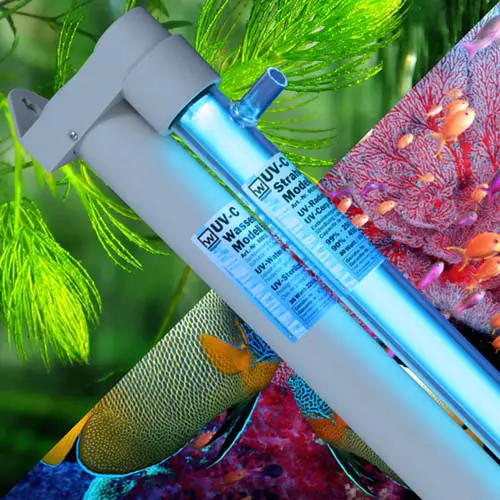
UV radiation
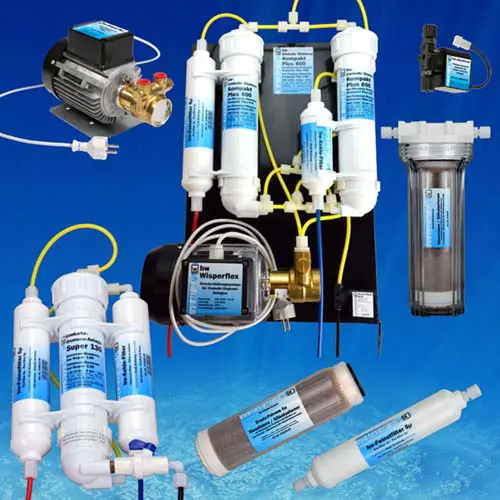
Reverse osmosis